| Authors |
Timpson
NJ, Lawlor DA, Harbord RM, Gaunt TR, Day IN, Palmer LJ, Hattersley AT,
Ebrahim S, Lowe GD, Rumley A, Davey Smith G.
|
| Abstract |
BACKGROUND:
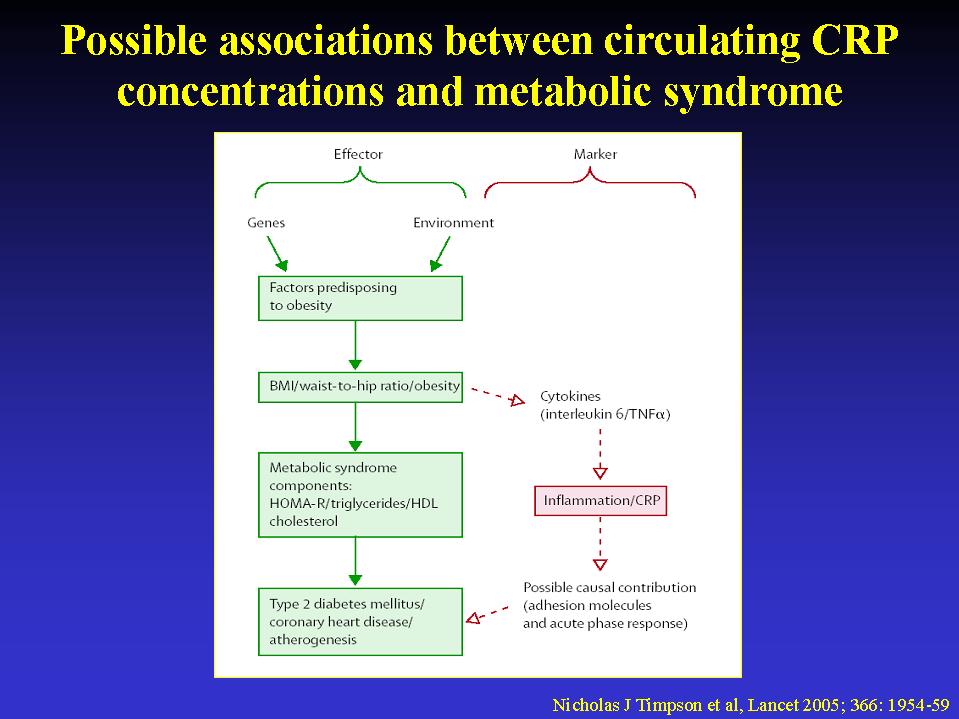
Circulating C-reactive protein (CRP) is associated with the metabolic
syndrome and might be causally linked to it. Our aim was to generate estimates
of the association between plasma CRP and metabolic syndrome phenotypes
that were free from confounding and reverse causation, to assess the causal
role of this protein.
METHODS: We examined associations between serum CRP concentration and
metabolic syndrome phenotypes in the British Women's Heart and Health
Study. We then compared these estimates with those derived from a mendelian
randomised framework with common CRP gene haplotypes to generate unconfounded
and unbiased estimates of any causal associations.
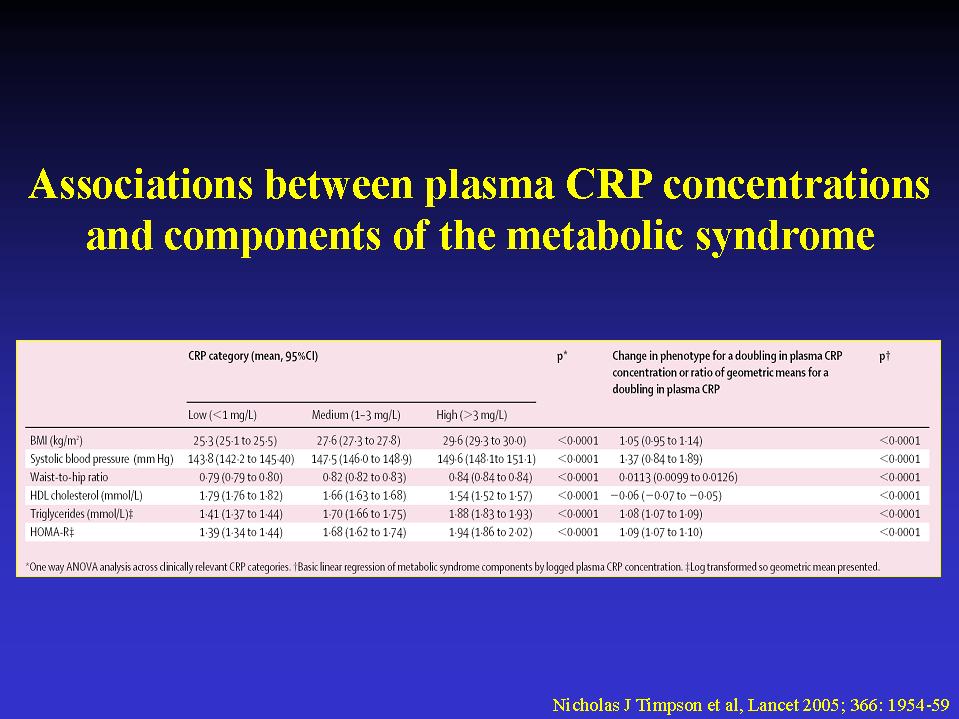
FINDINGS: In a sample of British women, body-mass index (BMI), systolic
blood pressure, waist-to-hip ratio, serum concentrations of HDL cholesterol
and triglycerides, and insulin resistance were all associated with plasma
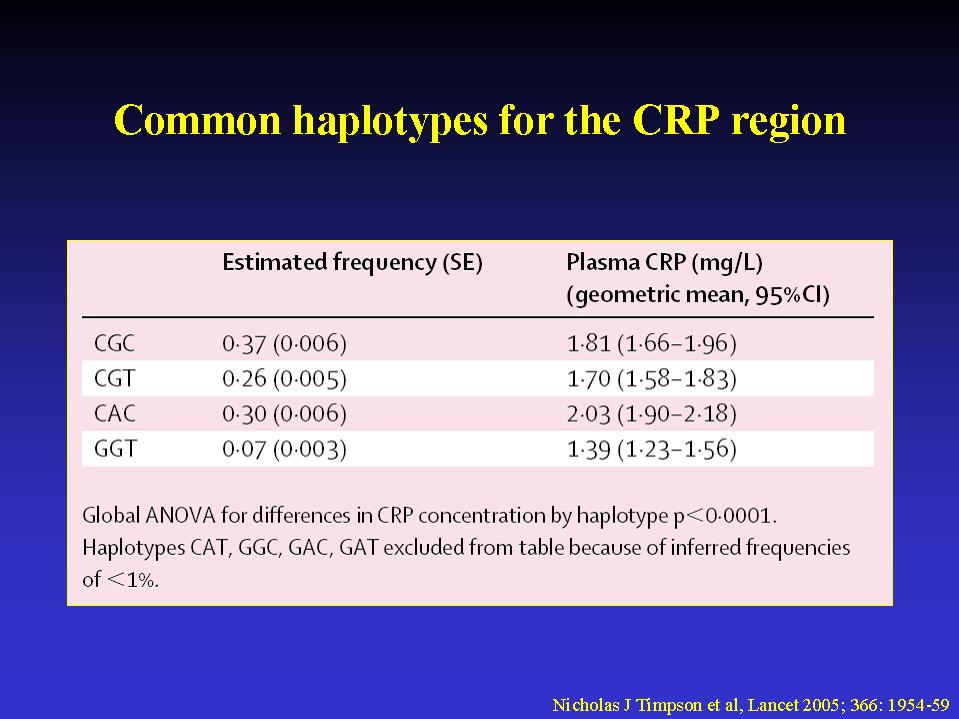
CRP concentration. CRP haplotypes were associated with plasma CRP concentration
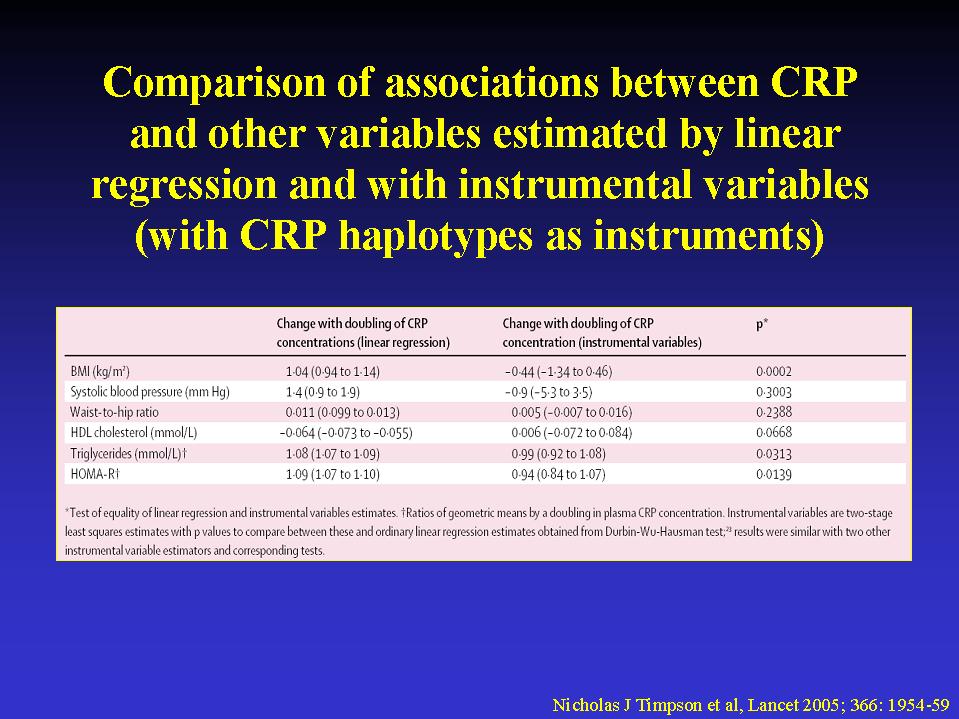
(p<0.0001). With instrumental variable analyses, there was no association
between plasma CRP concentration and any of the metabolic syndrome phenotypes
analysed. There was strong evidence that linear regression and mendelian
randomisation based estimation gave conflicting results for the CRP-BMI
association (p=0.0002), and some evidence of conflicting results for the
association of CRP with the score for insulin resistance (p=0.0139), triglycerides
(p=0.0313), and HDL cholesterol (p=0.0688).
INTERPRETATION: Disparity between estimates of the association between
plasma CRP and phenotypes comprising the metabolic syndrome derived from
conventional analyses and those from a mendelian randomisation approach
suggests that there is no causal association between CRP and the metabolic
syndrome phenotypes.
|