| Abstract |
CONTEXT:
Statins are cholesterol-lowering drugs that have been proven in randomized
controlled trials to prevent cardiac events. Recent retrospective analyses
have suggested that statins also prevent cancer.
OBJECTIVES: To investigate the effect of statin therapy on cancer incidence
and cancer death and to analyze the effect of statins on specific cancers
and the effect of statin lipophilicity or derivation.
DATA SOURCES: A systematic literature search of MEDLINE, EMBASE, CINAHL,
Web of Science, CANCERLIT, and the Cochrane Systematic Review Database
through July 2005 was conducted using specific search terms. A review
of cardiology and cancer abstracts and manual review of references was
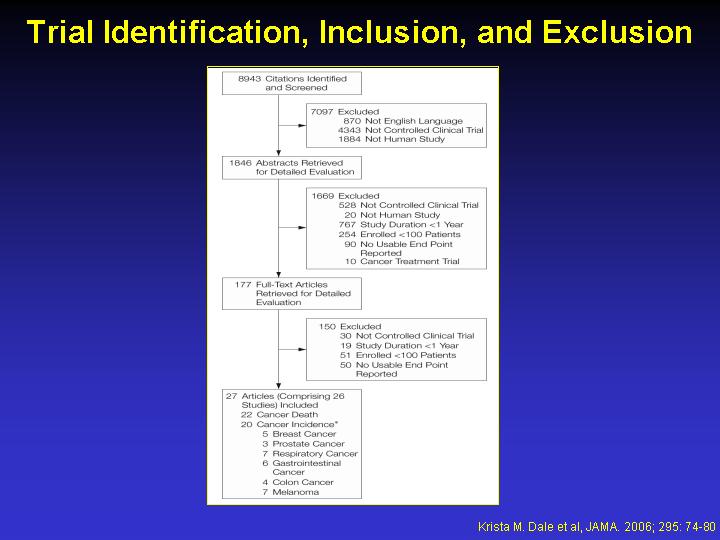
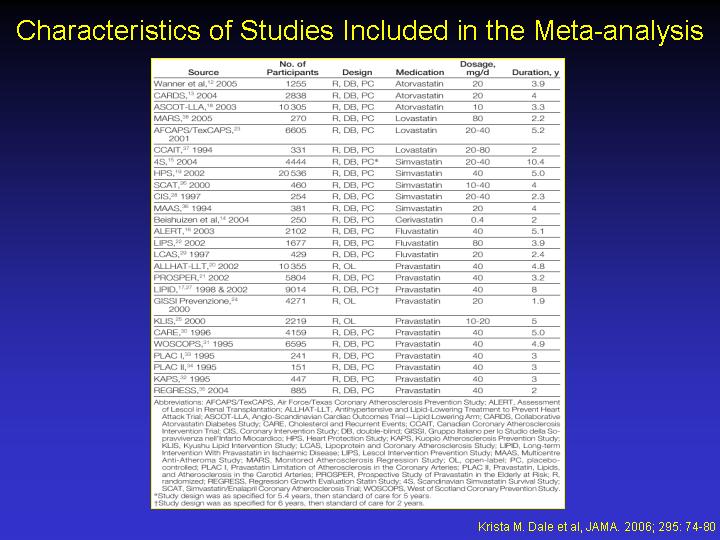
also performed. STUDY SELECTION: Twenty-seven of the 8943 articles (n
= 86,936 participants) initially identified met the inclusion criteria,
reporting 26 randomized controlled trials of statins, with a mean duration
of follow-up of at least 1 year, enrolling a minimum of 100 patients,
and reporting data on either cancer incidence (n = 20 studies) or cancer
death (n = 22 studies).
DATA EXTRACTION: All data were independently extracted by 3 investigators
using a standardized data abstraction tool. Weighted averages were reported
as odds ratios (ORs) with 95% confidence intervals (CIs) using a random-effects
model (DerSimonian and Laird methods). Statistical heterogeneity scores
were assessed with the Q statistic.
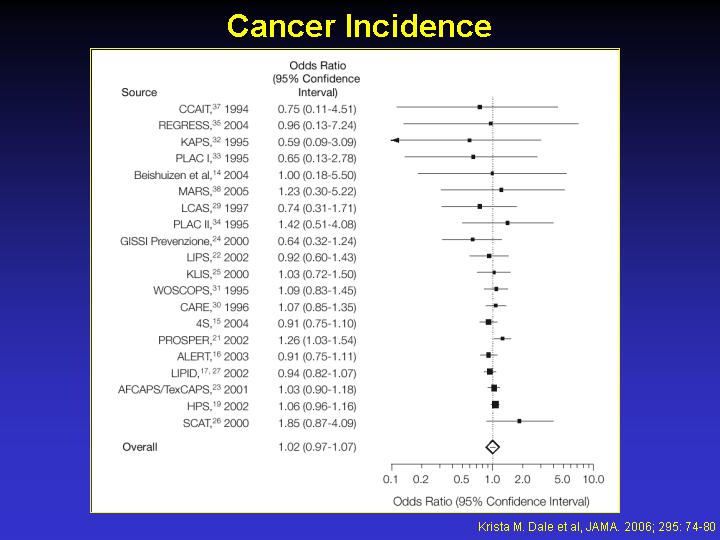
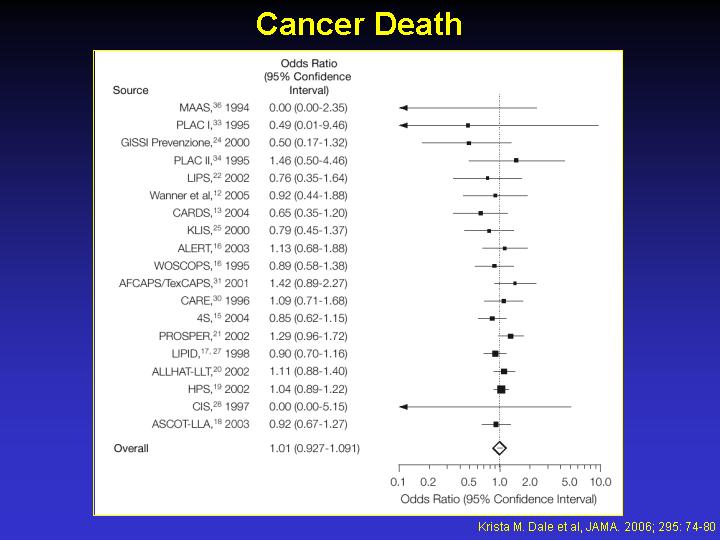
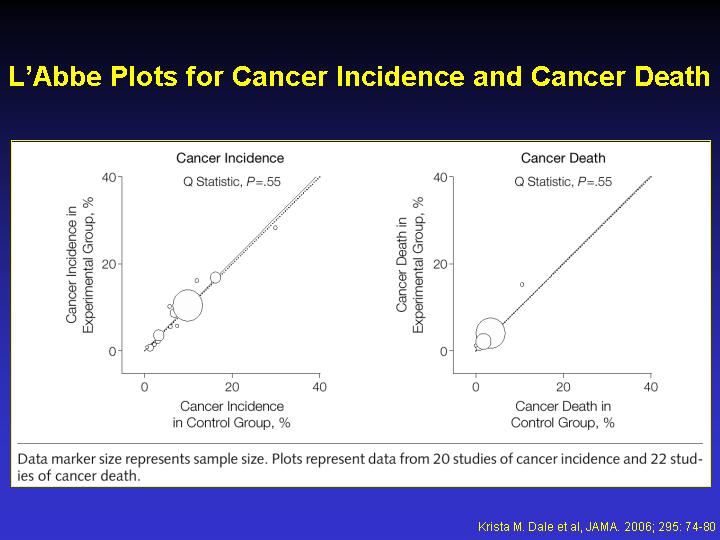
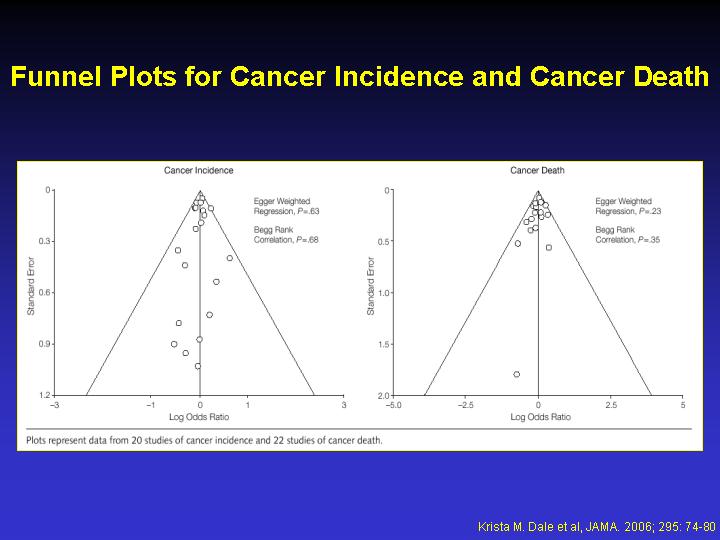
DATA SYNTHESIS: In meta-analyses including 6662 incident cancers and 2407
cancer deaths, statins did not reduce the incidence of cancer (OR, 1.02;
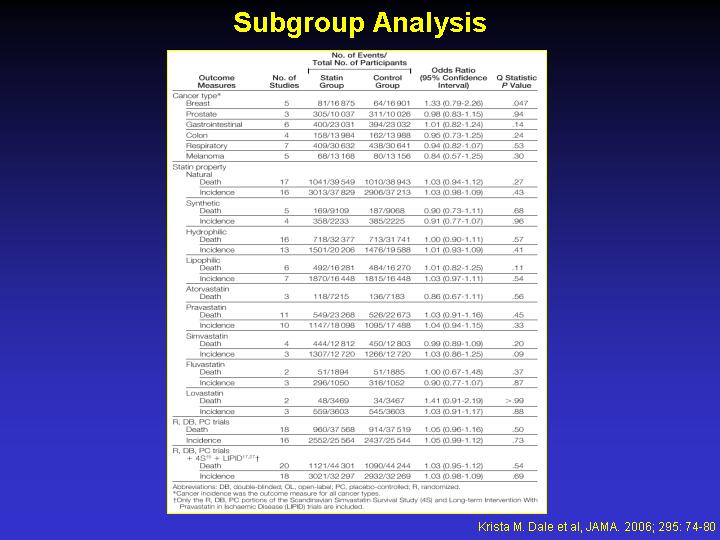
95% CI, 0.97-1.07) or cancer deaths (OR, 1.01; 95% CI, 0.93-1.09). No
reductions were noted for any individual cancer type. This null effect
on cancer incidence persisted when only hydrophilic, lipophilic, naturally
derived, or synthetically derived statins were evaluated.
CONCLUSIONS: Statins have a neutral effect on cancer and cancer death
risk in randomized controlled trials. We found that no type of cancer
was affected by statin use and no subtype of statin affected the risk
of cancer.
|