
| Author | Gregg W Stone |
| Title | Ischaemia versus bleeding: the art of clinical decision-making |
| Full source | Lancet 2009;373:695 - 696 |
| Text |
In
the USA, about one of every five deaths is attributable to coronary
artery disease (roughly one every minute, 450 000 a year).1
Reperfusion therapy is the foundation for effective management of
patients with ST-segment elevation myocardial infarction (STEMI),
and primary percutaneous coronary intervention (PCI) results in greater
myocardial salvage, and lower mortality, reinfarction, recurrent ischaemia,
and stroke than fibrinolytic therapy.2,
3 Increased use of interventional therapies
has been strongly associated with a steady decline in the yearly incidence
of death, cardiogenic shock, and heart failure in STEMI.4
Appropriate
use of antiplatelet drugs can optimise outcomes after PCI, particularly
in acute coronary syndromes, which are characterised by increased
platelet activation. Aspirin and adequate preloading with the thienopyridine
clopidogrel before PCI reduces the 30-day composite rates of cardiovascular
death or myocardial infarction in patients with non-STEMI and STEMI
needing revascularisation.5, 6
However, clopidogrel takes several hours to act, which limits the
platelet inhibition achievable during primary PCI in STEMI in view
of the emphasis on short door-to-balloon times.7
Furthermore, many patients have platelet hyporesponsiveness to clopidogrel,
which has been associated with major adverse cardiovascular events
and stent thrombosis.8 The delayed
onset and wide variability in efficacy with clopidogrel suggest the
need for more rapid and profound platelet inhibition. Prasugrel, a
thienopyridine currently undergoing review by the US Food and Drug
Administration, has a more rapid onset of action than clopidogrel
and is significantly more potent, overcoming clopidogrel-related platelet
resistance in almost all patients.9,
10 However, the inherent risk of increased
platelet inhibition is bleeding, which has been strongly linked to
mortality after PCI, especially in patients with STEMI.11,
12
In
The Lancet today, Gilles Montalescot and colleagues13
report a prespecified analysis from two somewhat heterogeneous STEMI
subgroups of the TRITON-TIMI 38 trial. One group included 2438 patients
with evolving myocardial infarction reperfused within 12 h of symptom
onset (true primary PCI), and the other included 1094 patients in
whom PCI was done within 14 days of myocardial infarction for ongoing
or recurrent ischaemia or as part of a routine invasive strategy (secondary
PCI). Of all STEMI patients who were randomised, prasugrel (compared
with clopidogrel) resulted in significant reductions in the 30-day
rates of all-cause and cardiovascular death, myocardial infarction,
and stent thrombosis, without significant differences in bleeding.
Between 30 days and 15 months, the rates of death, myocardial infarction,
and stent thrombosis were similar in both groups. After 15 months,
rates of myocardial infarction and stent thrombosis remained significantly
reduced with prasugrel, although there were no significant differences
in all-cause or cardiovascular death between the groups. More episodes
of major and minor bleeding accumulated between 1 and 15 months in
the prasugrel group, especially bleeding related to coronary-artery
bypass grafting, similar to that seen in the entire TRITON study population.14
It
is important to note that no significant interactions were seen between
STEMI versus NSTEMI presentation and prasugrel versus clopidogrel
randomisation on the major efficacy or safety endpoints. Therefore,
because the STEMI subgroup was underpowered for stand-alone conclusions,
the effect of prasugrel on both ischaemia suppression (efficacy) and
haemorrhagic complications (safety) should be deemed similar in the
patients with STEMI and NSTEMI enrolled in TRITON, unless larger studies
show otherwise.
This
latest TRITON-TIMI 38 report has several limitations. The protocol
specified prasugrel randomisation against a 300 mg clopidogrel loading
dose rather than the more rapidly acting and more potent 600 mg dose,
which is now considered standard-of-care for primary PCI (but was
not at the time when TRITON was designed). Similarly, most patients
in the secondary PCI group probably did not achieve the benefits of
adequate clopidogrel preloading before intervention. These limitations
are not idle academic musings; the size of the 30-day reduction in
major adverse cardiovascular events in TRITON with prasugrel compared
with clopidogrel was similar to that seen with adequate clopidogrel
loading compared with placebo in the PCI-CURE and PCI-CLARITY studies.5,
6
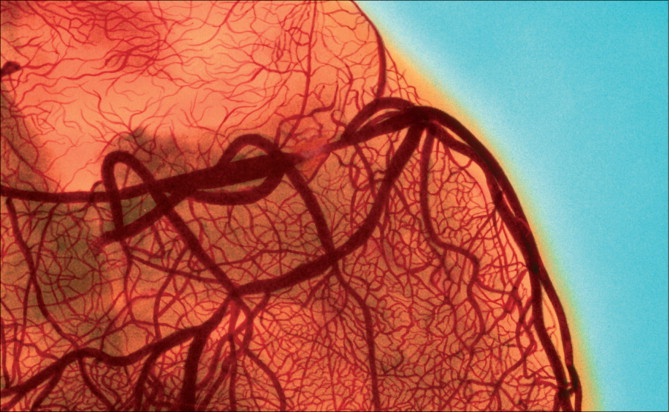 Colour-enhanced
angiogram of heart showing stenosis in a coronary artery
Despite
these caveats, the lessons and clinical implications from TRITON are
clear, and apply equally to the patients with STEMI and NSTEMI. The
accelerated and more profound inhibition of the platelet surface-membrane
P2Y12 receptor with prasugrel compared
with clopidogrel results in a substantial incremental reduction in
ischaemic cardiovascular complications (especially myocardial infarction)
and an impressive reduction in stent thrombosis after PCI.15
Offsetting these benefits is the potential for serious and occasionally
fatal haemorrhagic complications, resulting in an all-cause mortality
that is similar with both agents. The clear challenge ahead is to
identify those patients at low-to-intermediate risk of bleeding (or
at high risk of atherothrombotic events) who will benefit from prasugrel
without haemorrhagic complications.
An
alternative strategy might be to use full-dose prasugrel in the periprocedural
period for 30 days, when the rate of ischaemic complications is highest
and when the greatest absolute and relative benefits of prasugrel
have been seen. This step could be followed by chronic use of reduced-dose
prasugrel or standard-dose clopidogrel, when most of the haemorrhagic
complications with full-dose prasugrel occurred. However, these switch
regimens cannot currently be recommended until formally investigated.
Point-of-care platelet-function testing to tailor thienopyridine selection
or dosing is also appealing but untested.
TRITON-TIMI 38 shows that additional freedom from major adverse ischaemic events is possible in patients with acute coronary syndromes undergoing PCI through more profound platelet inhibition, and also provides a tantalising glimpse that balancing ischaemic and haemorrhagic risk through careful selection of patients and personalised pharmacotherapy should result in improved outcomes for patients with cardiovascular disease. The art of clinical decision making has never been more essential. GWS has received research support from The Medicines Company, Boston Scientific, and Abbott Vascular; and honoraria from Eli Lilly. References1
. Heart disease and stroke statistics' 2008 update.
Circulation 2008; 117: e25-e146.
2
. Primary angioplasty versus intravenous
thrombolytic therapy for acute myocardial infarction: a quantitative
review of 23 randomised trials. Lancet 2003; 361: 13-20.
3
. Angioplasty strategies in ST-segment-elevation
myocardial infarction: part I: primary percutaneous coronary intervention.
Circulation 2008; 118: 538-551.
4
. Decline in rates of death and
heart failure in acute coronary syndromes, 1999-2006.
JAMA 2007;
297: 1892-1900.
5
. Effects of pretreatment with
clopidogrel and aspirin followed by long-term therapy in patients undergoing
percutaneous coronary intervention: the PCI-CURE study.
Lancet 2001; 358: 527-533.
6
.
Effect of clopidogrel pretreatment before percutaneous
coronary intervention in patients with ST-elevation myocardial infarction
treated with fibrinolytics: the PCI-CLARITY study.
JAMA 2005;
294: 1224-1232.
7
. Time dependence of platelet
inhibition after a 600-mg loading dose of clopidogrel in a large, unselected
cohort of candidates for percutaneous coronary intervention.
Circulation 2005; 111: 2560-2564.
8
. Prognostic significance of post-clopidogrel
platelet reactivity assessed by a point-of-care assay on thrombotic
events after drug-eluting stent implantation. Eur Heart J 2008;
29: 992-1000.
9
. Prasugrel achieves greater and
faster P2Y12 receptor-mediated platelet
inhibition than clopidogrel due to more efficient generation of its
active metabolite in aspirin-treated patients with coronary artery disease.
Eur
Heart J 2008; 29: 21-30.
10
.
Prasugrel compared with high loading- and maintenance-dose
clopidogrel in patients with planned percutaneous coronary intervention:
the Prasugrel in Comparison to Clopidogrel for Inhibition of Platelet
Activation and Aggregation-Thrombolysis in Myocardial Infarction 44
trial. Circulation 2007; 116: 2923-2932.
11
. Adverse impact of bleeding on
prognosis in patients with acute coronary syndromes.
Circulation 2006; 114: 774-782.
12
. Bivalirudin
during primary PCI in acute myocardial infarction.
N Engl J Med 2008; 358: 2218-2230.
13
.
Prasugrel compared
with clopidogrel in patients undergoing percutaneous coronary intervention
for ST-elevation myocardial infarction (TRITON-TIMI 38): double-blind,
randomised controlled trial. Lancet 2009; 373: 723-731.
14
.
Prasugrel versus
clopidogrel in patients with acute coronary syndromes.
N Engl J Med 2007;
357: 2001-2015.
15
.
Intensive oral
antiplatelet therapy for reduction of ischaemic events including stent
thrombosis in patients with acute coronary syndromes treated with percutaneous
coronary intervention and stenting in the TRITON-TIMI 38 trial: a subanalysis
of a randomised trial. Lancet 2008; 371: 1353-1363.
|